Memory
Everything it keeps,
in plain sight.
Go back through old conversations and read what it has held on to. Correct it. Delete it. Changing the model does not wipe it and start you over.
Read the design notePrototype / Active study
An assistant that runs on your own machine, remembers what you tell it, and works with the tools you connect to it. Reach it from a browser, or just say its name out loud. With a local model it needs no internet connection at all.
Experimental prototype / Active development
The premise
A good conversation should not vanish because you changed the software answering it.
The memory is yours and it sits on your side, apart from the model. Swap the model, move to a new machine, go from a local model to a hosted one and back again: none of it starts you over. A faster machine answers faster, and nothing here insists on a particular one.
That is the whole bet. The pieces that are cheap to replace should be replaceable. The part that took months to build up should belong to you, and it should not be living inside something you rent.
On screen
The conversation, what it is allowed to do, what it remembers, and what is actually running. All within reach, without turning a chat into a dashboard. The pictures below are design studies with invented content, not a live assistant.
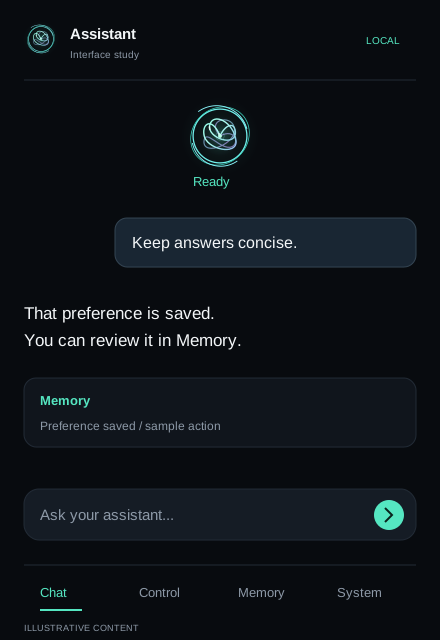
It brings up what you told it before without being asked. When it uses one of your tools you watch the tool run, and you see what came back.
Interface study. Invented content.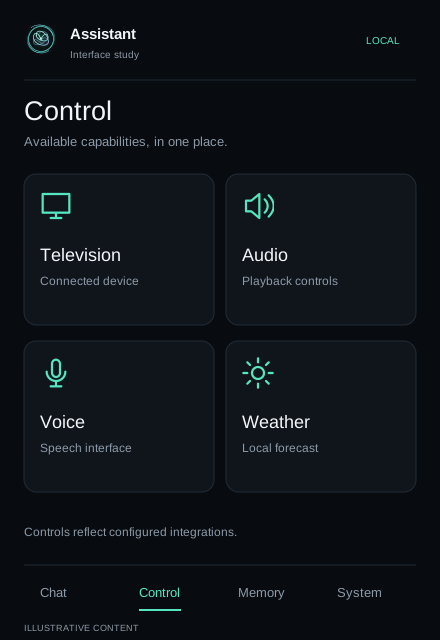
A plain list of what is connected and what is switched on. Nothing works until you turn it on, and each person sees only what they are allowed to use.
Interface study. Invented content.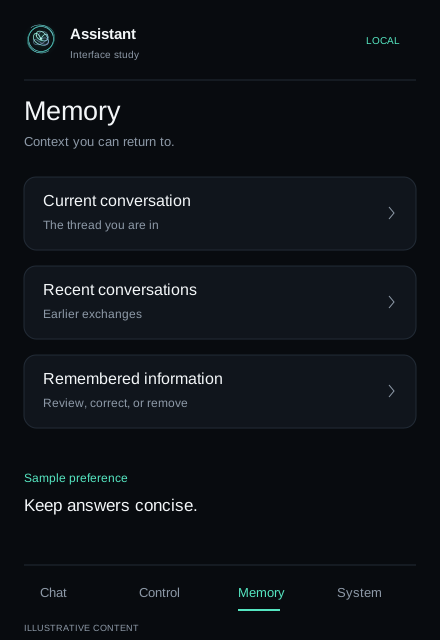
Read through old conversations and everything it has held on to. Fix what is wrong, delete what you would rather it forgot, and see where each piece came from.
Interface study. Invented content.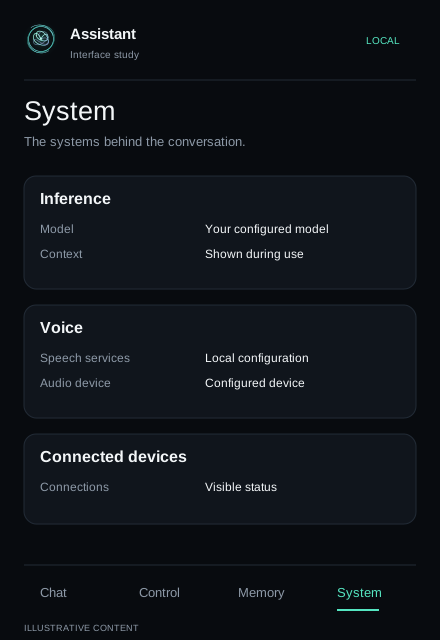
The model, how much room is left in the conversation, the voice services, the connected devices. Not one green dot standing in for all of it.
Interface study. Invented content.Sight
Any assistant can tell you that is a dog. This one tells you whose.
Take a photograph on your phone and it will tell you what it is looking at, using a model on your own machine. Then it does the part that actually helps: it puts what it sees next to what it already knows, and answers with both.
It treats what it sees as a hunch, not a fact. One look proves nothing, so the same thing has to turn up more than once, on separate occasions, before it will believe it. A dozen frames of the same moment still count once.
Read the design noteIn the room
The device hears its name on its own hardware and answers you out loud. Run it with a local model and the listening, the thinking, and the voice all happen on your machine. It knows which of you is speaking, and you can cut it off mid-sentence.

Footage of the working prototype as it stands. Hand-built, still under development, and no hardware release or availability date is announced.
The same system
Same conversation, same memory, same tools behind both. And whatever you have not switched on stays off, whichever way you arrive.

Memory
Go back through old conversations and read what it has held on to. Correct it. Delete it. Changing the model does not wipe it and start you over.
Read the design noteAction
You watch a tool run, finish, or fail. File changes arrive as a draft and a diff for you to approve first, and you can put them back afterwards. And if it ever tells you it did something when nothing actually happened, that gets caught.
Read the design notePeople
Your memory is yours. Household things stay shared, but what you tell it does not turn up in somebody else's conversation. It is built that way underneath, rather than asking the model to be discreet.
Where it came from
Whether you said it, it read it, or it saw it stays attached to the fact for good. Handy when you ask why it thinks something. Far more useful the day it is wrong.
Read the design noteYour machine
With a local model, the conversation, the memory, and the voice all keep going with the network off. Nothing ships with a model hidden inside it and nothing downloads one behind your back. It checks the files you give it before it loads one, and refuses anything it does not recognize.
Hosted models and outside services stay your call, and those companies have their own rules about data. Running locally is not a promise that every optional extra is offline too.
What it is learning
It pays attention to how it has been answering you. When something is not working, writing the flaw down is not the fix. Tell a model that it rambles, then read that back to it before every reply, and you have taught it to ramble. So it picks one specific thing to do differently instead, and watches whether that actually helped.
If it helped, the change sticks and the note goes away. If nothing moved, it tries different wording. If that fails too, it says so plainly rather than pretending. And sometimes the real problem turns out to be a bug rather than a habit, in which case it tells you that instead. All of it sits on one page, and nothing is erased unless you erase it.
Read the design noteVisible state
Ready, listening, thinking, working, speaking, and the three nobody enjoys designing: reconnecting, error, offline. Pick one to see how it looks.

Waiting for you.
State design preview / no live connectionWho this is for
Families who want an assistant with a memory and no account behind it. Engineers who keep rebuilding a worse version of this layer for their own tools. Companies that want what a model can do without first handing over everything it would have to read.
It is public now because those are the conversations worth having.
Current status
The browser, the memory, local and hosted models, the tools, the camera, and the voice device are all built and used in a real house every day. It is still a prototype, and the work now is on the everyday edges: quicker, steadier, and less surprising.
There is nothing here to buy, sign up for, or start a trial of.
Ask about the work